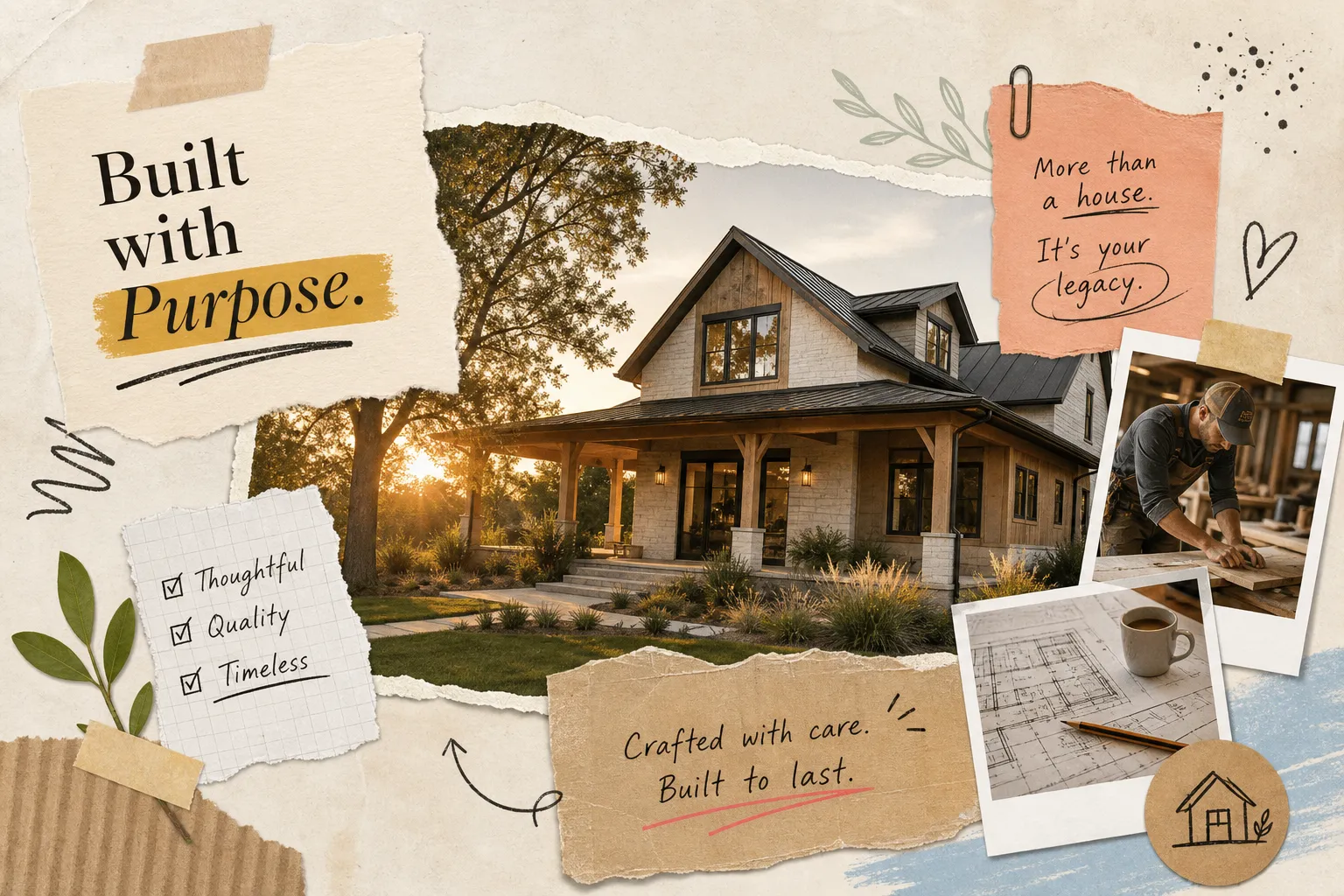
Walk into two homes of identical square footage and comparable price points. One stops you at the threshold. Something in the proportion of the rooms, the weight of the door handle, the way light falls across the stone floor feels deliberate, considered. The other, despite its premium fittings and branded kitchen, feels assembled rather than conceived. That gap is precisely what artisan home construction addresses, and it is not a gap that can be closed with an upgraded specification sheet.
Artisan construction is not a marketing label. It is a specific approach to building that prioritises hand-selected materials, skilled craftsmanship, and a measured pace over speed, volume, and margin optimisation. In India, this philosophy is gaining relevance among high-net-worth buyers who have grown weary of builder-grade luxury and begun asking a more precise question: not what the home costs, but what it is actually worth.
This article covers what artisan home construction means in practice, what it realistically costs in India in 2026, and how to identify, evaluate, and hire a custom home contractor who delivers on those values in the final structure, not just in the sales brochure. Boutique developers like Keshavaa, whose practice in Goa has been built entirely around this approach, offer a useful real-world reference for what this philosophy looks like when it is fully embedded in a development process rather than applied as a finishing coat.
The word “luxury” in Indian real estate has been stretched almost beyond usefulness. Most premium developments compete on amenities, branded lobbies, and location, not on the quality of material selection or the skill of the people who actually build the structure. Artisan construction sits in a different category entirely, and understanding why matters before you commit to either path.
Artisan home construction describes a process where materials are selected for their intrinsic quality rather than price efficiency, where skilled tradespeople are given adequate time to work with care, and where the design intent is preserved through every phase of the build. It is not compromised to meet a delivery schedule or protect a contractor’s margin. The practical difference between this and standard luxury custom construction is clear: artisan builds deliver exclusivity in workmanship and detail at every point in the home, while the latter emphasises size, amenities, and finish selection.
For buyers, this distinction carries long-term implications. A home built to artisan standards tends to age differently. Natural materials develop character rather than showing wear, and structural quality means less remediation over time. The quality of presence in the space, that sense that everything is where it should be, does not fade after the first few years.
The materials most commonly associated with artisan builds are natural ones: hardwood, natural stone, handmade tile, exposed masonry, and considered metal accents. These are not chosen purely for aesthetic reasons. Natural materials are repairable rather than replaceable, they develop character with age, and they are sourced in ways that give each project a specific relationship to its place. In Goa, for instance, artisan house builders often work with locally quarried laterite, regional clay tiles, and regionally sourced timber, materials that belong to the landscape rather than being imported into it. For more on material choices and workmanship see our Construction Quality coverage.
The tradeoffs are real and worth understanding before budgeting. Hardwood is warm and highly customisable, but it requires maintenance and responds to humidity. Stone is exceptionally durable with strong long-term value, though it adds weight to the timeline and cost. Handmade tile offers design flexibility and a long service life, but precision installation requires experienced tradespeople and cannot be rushed. These are not reasons to avoid natural materials, they are reasons to plan for them properly.
The craftsmanship techniques that define artisan builds include custom carpentry and millwork, timber framing, precision tilework, and detail-oriented finishing. None of these can be packaged into a compressed timeline; they require experienced hands and sufficient time on-site. Finishes are where a genuinely artisan build becomes legible to the discerning eye: honed stone surfaces, integrated trim work, hand-finished cabinetry, and bespoke joinery are the signatures of a construction team that has not cut corners at the final stage, which is precisely where most builders do.
One of the most persistent misconceptions about artisan home builders is that an extended timeline reflects poor management. In practice, the deliberate pace is structural to the process. Design review, material selection, and site supervision are all more thorough in a craft-led build. The costly rework and quality failures that compress timelines on less careful projects simply do not occur at the same frequency. The build is slower because it is being done correctly the first time.
At Keshavaa, this philosophy is embedded into the working method rather than described in the brochure. Boutique scale allows close oversight of every project. Earth-sourced and regionally appropriate materials are specified as a matter of course, not as an upgrade option. A design sensibility rooted in the relationship between built form and the natural Goan landscape shapes every decision, these are not positioning statements but the actual conditions of how each home is made. The outcome is a home that feels place-specific and irreplaceable rather than transplanted from a generic developer’s catalogue. They also explain the specific benefits of buying an under-construction property in Goa for buyers considering the market.
From the buyer’s perspective, intentional artisan home construction looks quite different from the standard developer handover. You participate in material selection. Design decisions are discussed rather than imposed. Milestones are communicated with transparency, and the process itself reflects the quality of the final product. A buyer who has experienced both knows the difference immediately.
Artisan and custom home construction in India currently ranges from approximately ₹2,200 to ₹4,500 per sq ft in most metro markets. Premium builds in cities like Mumbai can reach ₹4,500 to ₹7,000 or more per sq ft depending on finish quality, material provenance, and structural complexity, figures that reflect the higher cost of specialised procurement and skilled labour rather than inflated margins. Destination markets like Goa carry their own cost dynamics, shaped by material logistics and the availability of genuinely skilled craftsmen. For a comprehensive cost breakdown and recent per‑sq‑ft estimates, see this cost guide for building a house in India in 2026 and a focused per‑sq‑ft analysis.
A bespoke artisan build in India typically runs between 15 and 24 months from design commencement to handover. The most design-intensive or material-complex projects extend beyond that. Two phases consistently take longer than buyers anticipate:
As a widely observed rule of thumb in construction planning, budget a contingency of 10 to 15 per cent over your stated figure and build timeline buffers into your expectations from the outset. Buyers who do this move through the process without anxiety; those who do not will find the final months marked by difficult conversations that could have been avoided.
The credentials that matter when evaluating a bespoke builder are specific and verifiable. Confirm that the builder or developer holds the relevant building plan sanction, a Commencement Certificate for the project, and a clear pathway to the Occupancy Certificate at completion. The architect on the project team should be registered with the Council of Architecture. The contractor’s firm should carry proper business registration and, where applicable, site insurance. These are not bureaucratic formalities, they are evidence of a legitimate and accountable process, and any reputable craftsman home construction firm will produce them without hesitation.
When reviewing a portfolio, look for material consistency across projects, visible finish and joinery quality in photographs, and evidence that the design intent was preserved through to completion rather than compromised during the build. Generic floor plans dressed in different finishes are a clear signal of a builder who is not working to artisan standards. Testimonials from previous clients, particularly about the process, communication, and handover quality, are as informative as the photographs themselves.
Before committing, ask these questions directly:
The answers reveal the builder’s actual working method. A builder who answers each of these with specificity and without defensiveness is describing a real process. One who answers in generalities is describing a marketing position. For additional suggested questions you can adapt to your own project, see this resource on questions to ask your home builder.
A well-prepared project brief is the single most useful thing you bring to the first substantive conversation with a builder. It should cover site constraints and orientation, your material preferences and non-negotiables, a realistic budget range with a stated contingency, and timeline expectations with named milestones. Include any design considerations that should drive the architecture: natural light, cross-ventilation, the indoor-outdoor relationship, and how the home connects to the landscape around it. A builder who responds to this brief with genuine engagement and specific questions is demonstrating the collaborative mindset that artisan home design and build requires.
The contract protections worth negotiating before you sign are equally specific. Insist on a phased payment schedule tied to verified construction milestones rather than calendar dates. Confirm in writing who owns the design documentation, and establish a clearly defined snagging and defect liability period. Specify in the contract exactly which materials and finishes are included, named by brand, grade, and provenance, not described as “equivalent” or “similar to.” In India, where bespoke builds involve longer timelines and more complex material supply chains, these protections are not optional niceties. They are the difference between a smooth handover and a disputed one.
Also confirm that the contract addresses GST and tax treatment explicitly, that price escalation risk for materials such as stone, hardwood, and imported finishes is allocated clearly, and that all variations and site instructions will be documented in writing. Verbal agreements on a construction site have a way of being remembered differently by both parties six months later.
Artisan home construction is a philosophy as much as it is a method. Materials are chosen with care. Craftspeople are given the time and conditions to work well. The final home reflects a coherent design intention rather than a series of cost-cutting compromises made under schedule pressure. It is the kind of building that does not date, because it was never chasing a trend in the first place.
For buyers in India evaluating this path, the practical groundwork is now clear. Understanding precisely what you are paying for, and why the premium is justified, should come before any site visit. A realistic timeline, protected contractually, and a builder’s credentials assessed with specificity rather than sentiment are the foundations of a successful project. Bring a thorough project brief to that first conversation, and the process begins on solid ground. For additional context on realistic timelines for a custom home, this discussion of how long it takes to build a custom home is a useful reference.
Developers like Keshavaa, who have spent nearly two decades building this way in Goa, offer a clear reference point for what it looks like when artisan values are built into an entire practice rather than applied as a finishing coat. If you’re curious about market dynamics in the region and why a few investors are quietly buying villas in South Goa right now, that context helps explain buyer behaviour in destination markets. A home conceived as a handcrafted legacy is a fundamentally different asset from one conceived as a product, and that difference announces itself the moment you cross the threshold for the first time.